
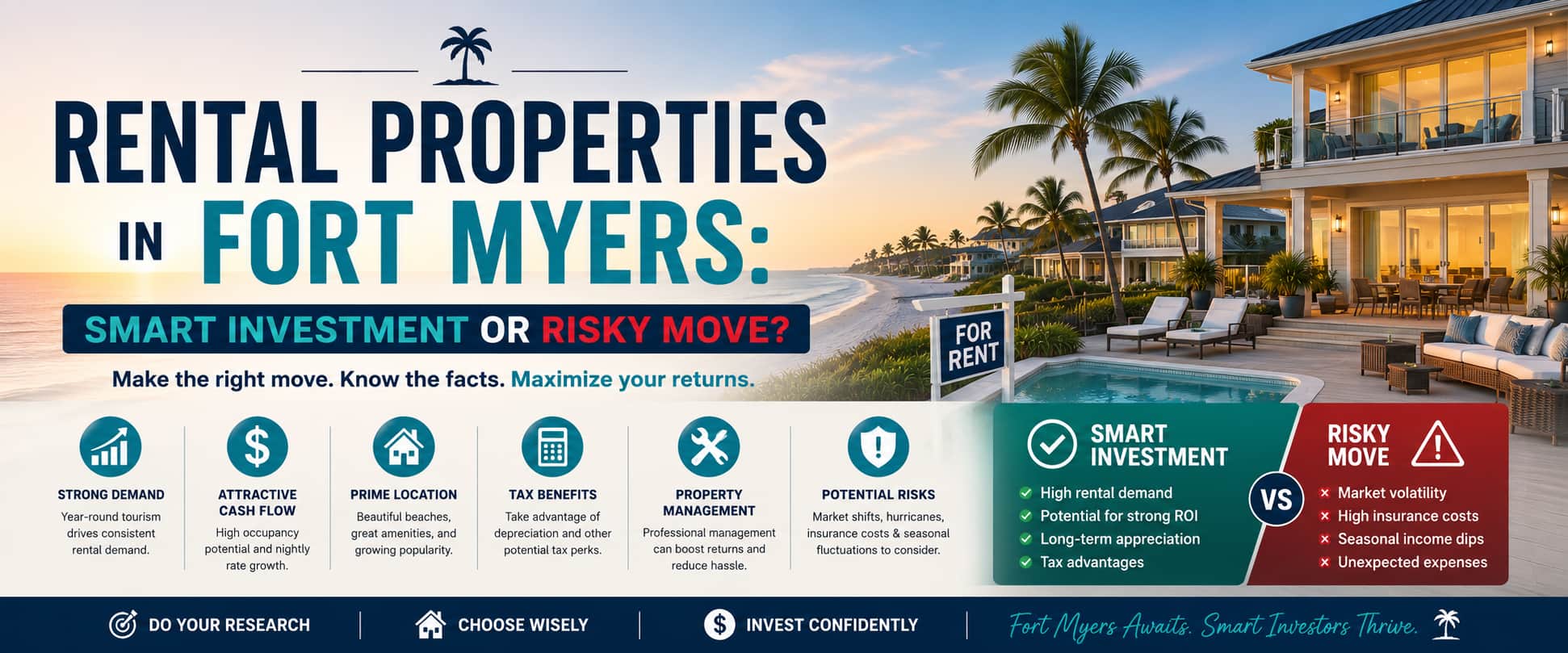
Fort Myers keeps showing up on "best places to invest in real estate" lists, and it's not hard to see why. Gulf Coast access, growing population, mild winters, and a tourism economy that was humming along well before remote work made Florida even more attractive. But lists like that are written to get clicks, not to help you make a sound financial decision.
So here's a more honest take: is buying a vacation rental in Fort Myers actually a smart move right now, or is the hype running ahead of the reality?
The answer depends a lot on what you buy, where it sits, and how you plan to run it.
What's Actually Drawing Investors to Fort Myers
The fundamentals are real. Fort Myers and the surrounding Lee County area have seen consistent population growth over the past decade people relocating from the Northeast and Midwest for retirement, remote work, or just lower cost of living relative to other Florida metros. That resident base creates stable long-term rental demand even outside peak tourist season.
On the vacation side, Fort Myers Beach sits on Estero Island and draws a different crowd than Miami or Orlando: families who return every year, snowbirds who stay for weeks, couples who prefer a quieter stretch of Gulf Coast over the crowds further south. The visitors tend to be repeat guests, which creates something more valuable than one-time bookings a loyal base that's easier (and cheaper) to market to.
Fort Myers itself, as a city, also offers more affordable entry points than Naples to the south. You can still find properties at price points that allow for reasonable returns, though that window has tightened since 2020.
The Hurricane Ian Factor: Honest Assessment
Any serious investor needs to understand what happened to this market in September 2022.
Hurricane Ian made landfall near Fort Myers Beach as a Category 4 storm and caused severe damage across the island and inland areas. Some properties were destroyed. Others sat uninhabitable for months. The recovery has been real and steady roads rebuilt, businesses reopened, new construction underway but the island in 2026 is still not what it was in 2021.
That's not necessarily bad news for investors. It means:
- Some properties sold at a discount during recovery, though those deals are harder to find now
- New and newly renovated inventory is more storm-resilient than older stock
- Insurance costs have increased significantly and need to be factored into any return calculation
- Some long-time rental operators left the market, reducing competition for those who stayed
If you're evaluating rental properties in Fort Myers post-Ian, ask specifically about the property's damage history, insurance claim history, and current policy costs before running any numbers.
How the Numbers Actually Work
Vacation rental math is easy to get optimistic about and hard to get right.
Here's a rough framework for a beachside property in the Fort Myers Beach area:
Revenue side: A well-managed 2-bedroom property close to the Gulf can realistically generate $40,000–$70,000 in gross annual rental revenue depending on location, quality, and how actively it's managed. Properties that sleep more guests or are steps from the beach can push higher.
Expense side: This is where people underestimate. Factor in:
- Property management fees (typically 20–30% of revenue)
- Insurance (significantly higher post-Ian get actual quotes before buying)
- Property taxes
- HOA fees, if applicable Cleaning and turnover costs
- Maintenance reserve (budget 1–2% of property value annually, minimum)
- Platform fees if self-managing
- Mortgage if financing
After expenses, net operating income on a typical vacation rental often runs 40–55% of gross revenue. That's before mortgage payments.
The investors who run into trouble are usually the ones who projected on gross revenue and forgot half the expense line.
Location Within Fort Myers Matters More Than Most Buyers Realize
"Fort Myers" covers a large area. The guest experience and therefore your rental income varies significantly depending on exactly where your property sits.
Fort Myers Beach (Estero Island) is the obvious anchor for vacation rental demand. Walk-to-beach access, proximity to the pier and Times Square restaurant district, and a distinctive barrier island feel that guests specifically seek out. Properties here command higher nightly rates but also carry higher purchase prices.
Cape Coral, connected to Fort Myers by bridges across the Caloosahatchee River, has a massive canal system and attracts a different kind of guest boaters, fishing enthusiasts, and families who want water access without the beach crowd. It's generally a lower price point with solid vacation rental potential if marketed correctly.
Inland Fort Myers (closer to I-75 and the airport) has stronger long-term rental demand from residents and snowbirds but weaker short-term vacation appeal unless near specific attractions.
For vacation rental purposes, proximity to the Gulf beach and dining is still the primary driver of nightly rate premium.
Self-Managing vs. Using a Property Manager
This question comes up constantly, and the honest answer isn't what most people want to hear: self-management is rarely as cheap as it looks.
Yes, you save the 20–30% management fee. But you absorb the time cost of responding to inquiries, coordinating cleaning crews, handling maintenance calls at inconvenient hours, adjusting pricing, managing reviews, and dealing with platform disputes. If you live locally and have time for it, that tradeoff can work.
If you don't live near the property or you do but you don't want vacation rental management to become your second job a professional manager typically earns their fee through better occupancy, smarter pricing, and fewer costly mistakes.
Villas in Fort Myers Beach Villas in Fort Myers Beach Villas in Fort Myers Beach managed by experienced local operators tend to maintain higher occupancy and review scores than comparable self-managed properties, partly because local knowledge translates into better guest communication and faster problem resolution.
When evaluating managers, look beyond the commission rate. Ask about their average occupancy rates for comparable properties, how they handle maintenance emergencies, and whether they use dynamic pricing tools or set flat rates.
What a Well-Managed Property Actually Looks Like
The difference between a vacation rental that performs and one that limps along usually comes down to a few things:
Photography that sets accurate expectations:
Guests who aren't surprised by what they find at check-in don't leave bad reviews. Overlit, wide-angle shots that make a small living room look enormous will get you bookings and then get you one-star reviews.
Pricing that responds to the market:
Fort Myers Beach has clear peak seasons (January through April) and clear soft spots (late summer, early fall). Properties that use flat pricing leave money on the table during peak season and sit empty during shoulder periods.
A maintenance system, not just a handyman on speed dial:
Properties that get inspected between every stay catch problems before guests do. A proactive checklist appliances, HVAC, plumbing, exterior is the difference between a minor fix and a guest posting about it publicly.
Local recommendations that feel personal:
Guests staying in a vacation rental want to experience a place, not just sleep somewhere. A welcome guide that mentions the best local restaurants and beach access points updated regularly, not printed five years ago gets guests excited and generates reviews that mention "felt like home."
5 FAQs About Rental Properties in Fort Myers
1. Is Fort Myers Beach still worth investing in after Hurricane Ian?
Yes, for investors who go in with clear eyes. Recovery is ongoing, new construction is happening, and tourism has returned. The market is different from 2021, but properties with solid fundamentals location, condition, management are performing well.
2. What's the average occupancy rate for vacation rentals in Fort Myers Beach?
Well-managed properties in good locations typically run 65–80% occupancy annually. Peak season (January–April) can hit 90%+. Numbers drop in late summer but can be supported with competitive pricing.
3. Do I need a license to rent short-term in Florida?
Yes. Florida requires a vacation rental license through the Department of Business and Professional Regulation (DBPR). Lee County and Fort Myers Beach may have additional local requirements. Check both before listing.
4. How has insurance changed post-Ian for Fort Myers area properties?
Significantly. Florida's insurance market was already stressed before Ian; the storm accelerated rate increases and caused some carriers to exit the market. Budget for higher premiums than you'd expect and get actual quotes not estimates as part of your due diligence.
5. Can I use my property occasionally and still rent it out the rest of the year?
Yes. Most vacation rental arrangements allow owner-use blocks. Just communicate clearly with your property manager about blocked dates in advance, especially during peak season, since those periods represent your highest revenue weeks.
Conclusion
Fort Myers is a real market with real fundamentals not just a trending destination on an investor listicle. The Gulf Coast draws consistent, repeat visitors. The price points are more accessible than Miami. The tourism recovery post-Ian is happening, even if it's uneven.
But none of that means every property is a good investment. The deals that work are in the right location, bought at a realistic price, managed properly, and insured accurately. The ones that don't work are usually the opposite of at least one of those things.
If you're serious about it, spend time in Fort Myers Beach before you buy. Walk the neighborhoods. Talk to property managers who operate there. Look at actual occupancy data on comparable listings. The upside is real but so is the work required to get there.