
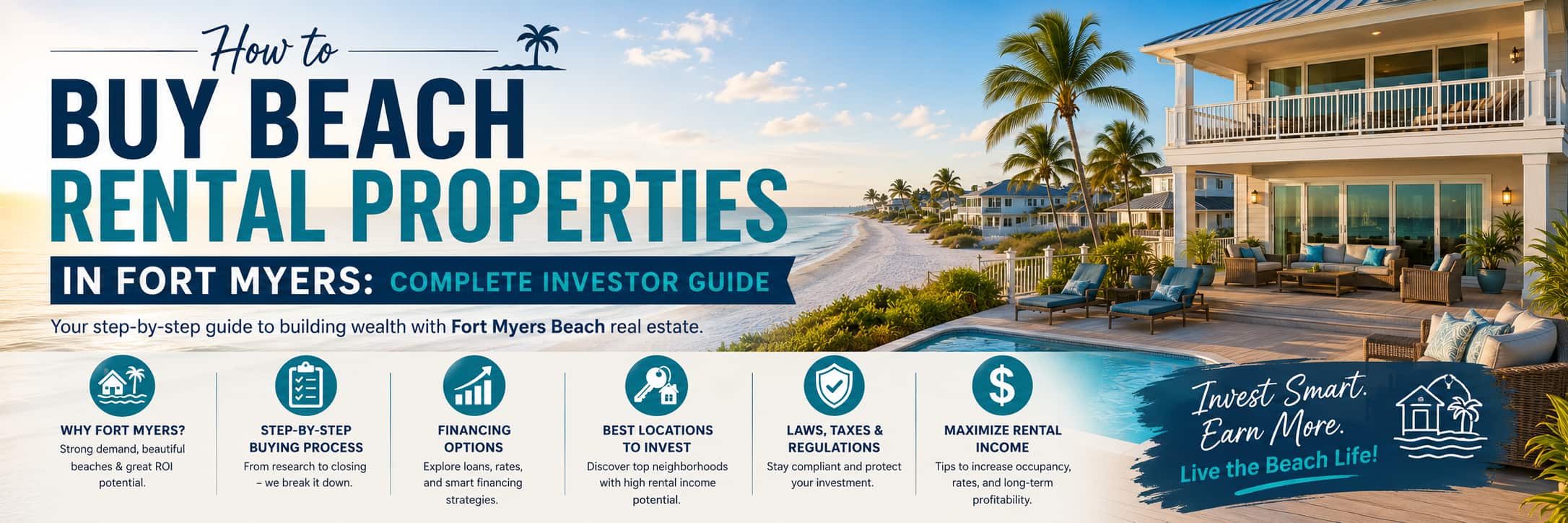
Fort Myers Beach has a way of getting under your skin. You visit once the warm Gulf water, the laid-back atmosphere, the sunsets that look almost fake and by the time you're packing your bags, you're already wondering what it would cost to own something here.
Plenty of people make that leap. Some do it well. Others rush in, skip the homework, and end up with a property that bleeds money instead of generating it. The difference usually comes down to preparation.
This guide is for people who are serious about buying rental properties in Fort Myers not just daydreaming about it.
Why Fort Myers Beach Keeps Attracting Real Estate Investors
The short answer: demand. Fort Myers Beach pulls in visitors year-round, but the peak season roughly November through April brings an especially reliable wave of snowbirds and vacation travelers from the Northeast and Midwest. That seasonal spike translates to strong short-term rental rates when you price and market the property right.
A few things work in investors' favor here:
- No state income tax. Florida's tax structure is genuinely friendlier to property owners than most states.
- Weather-driven demand. When it's freezing in Chicago or Cleveland, people book Gulf Coast properties. That's not going away.
- Post-hurricane recovery. After Hurricane Ian's damage in 2022, the area went through a significant rebuild. Newer construction means updated inventory which renters prefer and which can justify higher nightly rates.
- Accessible entry points. Compared to Miami or the Florida Keys, Fort Myers Beach offers a wider range of property types at varying price points.
The recovery has been uneven, honestly. Some blocks look finished. Others are still working through it. Walking the neighborhoods yourself not just browsing listings tells you a lot more than photos do.
Step 1: Get Clear on Your Investment Goals
Before looking at a single listing, decide what you actually want this property to do.
Are you looking for maximum short-term rental income? A long-term tenant who keeps things simple? A mix personal use part of the year, rented out the rest? Each of these paths points you toward a different type of property in a different part of the area, and they each carry different risks.
Short-term vacation rentals can generate significantly more revenue per night, but they also mean more management, more turnover, and more dependence on platforms like Airbnb or VRBO. Long-term rentals are steadier but won't capture the premium that Fort Myers Beach commands during peak season.
Most investors coming into this market lean toward short-term. That's where the numbers tend to work best but it also requires more active involvement or a reliable local property manager.
Step 2: Know What Properties Actually Look Like in This Market
Before underwriting any deal, it helps to understand what the active rental inventory looks like. Browsing beach villas Fort Myers Beach FL gives you a real ground-level view how properties are positioned, what amenities guests expect, and how the market is actually structured.
Based on current inventory in Fort Myers Beach, here's a realistic snapshot of what different property types command per night:
Studio / 1-bedroom units (sleeps 4): roughly $98 – $412/night depending on season and amenities
2-bedroom villas (sleeps 4–6): typically $117 – $529/night
3-bedroom private homes with pools (sleeps 6–10): range from $125 – $909/night
Large 5–6 bedroom homes (sleeps 10–20): can reach $253 – $2,750/night at peak
These figures reflect real listings not projections. Notice the wide range even within each category. Location (steps to beach vs. a block or two away), pool access, number of guests accommodated, and quality of finishes all drive significant variation in what a property can command.
The takeaway for investors: amenities matter. Properties with heated pools, beach proximity, and modern interiors consistently outperform comparable units that are missing even one of those boxes.
Step 3: Understand Local Rules Before You Fall in Love with a Property
This is where a lot of first-time investors get burned.
Fort Myers Beach and the surrounding Lee County area have specific zoning rules, HOA restrictions, and short-term rental regulations that vary by property type, neighborhood, and even building. Some condos in desirable areas explicitly prohibit rentals under 30 days. Others have rental caps meaning only a certain percentage of units in a building can be rented at a time.
Post-Ian, the regulatory environment has also shifted in some areas as the community works through rebuilding. Don't assume rules from two years ago still apply.
Before making an offer on anything:
- Talk to a local real estate attorney
- Check the HOA bylaws the full document, not a summary
- Verify the current zoning classification with Lee County
- Confirm the property's rental history with actual records, not seller estimates
Skipping this is how investors end up owning beachside property they can't legally rent out.
Step 4: Know Your Neighborhoods
Fort Myers Beach is a stretch of barrier island with distinct pockets that attract different types of renters.
Times Square and Pier Area: High foot traffic, walkable, popular with younger vacationers. Great for short-term rental volume but noisier and more competitive.
Mid-Island: Quieter and more residential. Families tend to gravitate here. Properties are often slightly more affordable, and the rental profile is a bit more stable year-round.
South Island: More secluded, with a mix of vacation homes and established communities. Can command premium rates for the right property especially anything with direct beach or canal access.
Understanding which neighborhood fits your target renter profile matters more than most investors realize at the start.
Step 5: Run Real Numbers Not Optimistic Ones
Projected income figures from sellers and listing agents tend to be generous. Take them as a starting point, not a forecast.
A more grounded approach:
- Pull comparable rental data from Airbnb and VRBO for similar properties in the same zip code
- Look at occupancy rates, not just nightly rates. A property at $450/night that sits empty 40% of the time can underperform one at $275/night with consistent 70%+ occupancy
- Build in realistic expenses: property management (typically 20–30% of rental income for full-service), Florida coastal insurance (budget carefully see below), HOA fees, property taxes, maintenance, and a capital reserve for repairs and between-season updates
If the deal only works on a best-case scenario, it's not a good deal. Underwrite to average conditions.
Step 6: Financing and Insurance Are Not Simple Here
Getting a mortgage on a vacation rental property in a coastal flood zone involves different rules than a standard residential purchase.
Most lenders will require:
- A higher down payment usually 20–25% minimum for investment properties
- Proof of rental income potential or existing rental history on the property
- Flood insurance in addition to standard homeowners coverage
Insurance deserves extra attention. Post-Ian, Florida's property insurance market has become genuinely difficult. Some carriers have left the state entirely. The ones remaining have raised rates substantially on coastal properties. Get real insurance quotes before you close not after. What coverage actually costs can change the math on a deal significantly.
For visitors considering a Fort Myers beach vacation rental before purchasing, staying in the area first is useful market research. You'll see what guests actually experience, which amenities drive satisfaction, and what separates a 5-star review from a 3-star one.
Step 7: Have a Management Plan from Day One
Owning a rental from out of state or even across town requires a management plan before you close, not after.
Local property management companies handle bookings, cleanings, maintenance calls, and guest communication. For most investors who aren't living nearby, this is worth the cost. The 20–30% cut is real, but so is getting a 2am call about a broken AC unit when you're in another state.
If you plan to self-manage, you need local contractors you trust, a cleaning crew that can turn over a property on short notice, and the bandwidth to respond to guests quickly. Guests at beach properties have options they'll leave a bad review and book elsewhere if the experience isn't smooth.
Final Thought
Fort Myers Beach is one of the more solid Gulf Coast markets for short-term rental investment. The demand is real, the lifestyle appeal travels well, and the post-Ian rebuild has brought genuinely updated inventory into a market that was overdue for it.
The investors who do well here treat it like a business from the start not a fantasy. Know the rules, run conservative numbers, and budget for what ownership in a coastal Florida market actually costs.
Get those things right, and a beach rental property here can be a serious long-term asset.
Frequently Asked Questions
Is Fort Myers Beach a good market for vacation rental investment right now?
The area has recovered well from Hurricane Ian and is showing solid demand from travelers. Occupancy and nightly rates have rebounded across most neighborhoods. It's a reasonable time to buy if you're patient and selective but don't expect instant returns without doing the homework first.
What type of property performs best for short-term rentals?
Properties with direct beach access, water views, or private heated pools consistently outperform comparable units that lack those features. Newly renovated interiors matter too guests compare photos carefully before booking, and outdated units get passed over even when the location is good.
Do I need a license to rent out a vacation property in Fort Myers?
Yes. Florida requires a license through the Department of Business and Professional Regulation (DBPR) for properties rented more than three times per year for periods under 30 days. Lee County and local municipalities may have additional requirements. Confirm all of this with a local attorney before listing anywhere.
How much does property insurance cost for a coastal Fort Myers home?
Rates vary significantly based on the property's flood zone, construction type, and age. Get multiple quotes early in your due diligence before you're under contract so the cost doesn't surprise you at closing. Florida coastal insurance has become expensive enough that it should be a line item in every deal model.
Should I buy a condo or a standalone home for rental income?
Both can work. Condos typically have lower individual maintenance responsibilities but come with HOA fees and bylaws that can restrict rental activity. Standalone homes give you more control and flexibility but require you to manage all maintenance directly. The better question is: which fits your management capacity, budget, and target guest?